|
|
Your independent travel consultant for Kea We offer a selection of quality vacation rentals in Kea. |
|
|
Your independent travel consultant for Kea We offer a selection of quality vacation rentals in Kea. |

|
 |
|
Unlike other islands, Kea remains a quaint, very low profile, rugged island, with few tourists, numerous pristine beaches, beautiful blue green waters, ancient cobblestone marked foot-paths, bird-watching nature reserves, few hotels and mostly, privately owned houses. Seasonally or permanently, to relax
and enjoy, Kea boasts known names of the Greek and international
jet-set in business, |
|
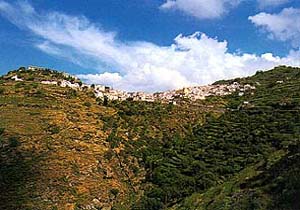
Ioulis (Kea) |
Ioulis (Kea) |
|
. |
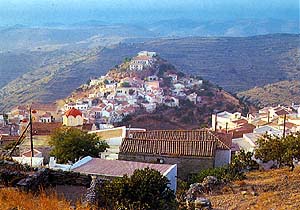
Korassia |
|
Korassia |
Korassia |
|
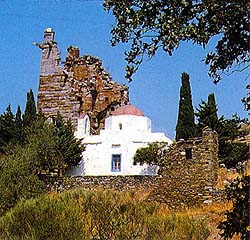
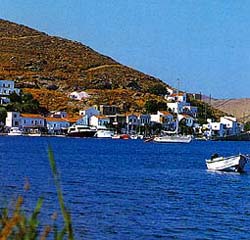
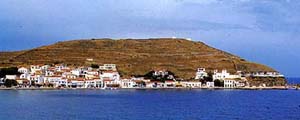
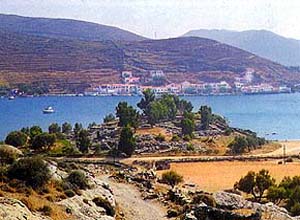
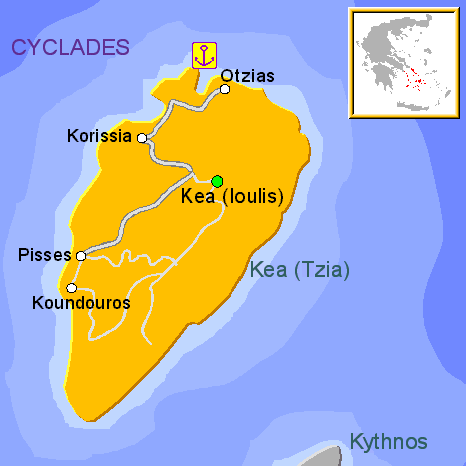
The total surface of the island is 121 sq. km. and its circumference 86 km. The mountain masses, which are encountered in most of the Cyclades, are broken up by small valleys sparsely planted with vines and fruit-trees and run right down to the sea, opening out into pretty little bays. The highest mountain of the island is Profitis Elias (568 m). When one sees the island from far away it seems barren, but in reality there are plenty of oak trees. Its capital, Hora (Ioulis), is a short drive (6 km) from the port Korissia (Livadi) and has maintained its Cycladic idiom intact. Built in the shape of an amphitheater (on the side of a mountain), it presents the visitor with an impressive vista of two-storey houses and tiled roofs, steep cobbled alleyways and splendid churches with elaborately carved wooden icon screens. It is a picturesque village, with a very interesting archaeological museum. Visitors may find uncluttered beaches at Pisses, Korissia, Koundouros, Otzia and Poles. An Island with several similarities with the other Cycladic Islands but at the same time somehow different , with its own charm. The style of the island today is mostly Cycladic but has kept some differences including the style of houses, using tiled roofs instead of the mainly cycladic white washed tower tops. It also has more than 200 churches, some of which, such as Agia Anna, Episkopi and Agios Panteleimon are Byzantian monuments. The interior of the island is dotted with miniature chapels, windmills and monasteries, including that of Panagia Kastriani, Kea's patron saint. The picturesque narrow alleys of Hora are covered by arches called "stegadia" and the roofs of the white little houses are decorated with tiles. The harbour of Korissia is the main holiday resort of Tzia, attracting many visitors to its shady beach. On the southern side of Tzia is Pissa
beach , one of the island's most famous, with finely -grained
sand and crystal clear waters. The beaches are wonderful and
the taverns are traditional Greek. Climb up to Hora when the sun sets and visit loulida built on the site of the ancient city. Afew ruins of the acropolis are visible on the top of the hill, at the same place where the castle was built during the middle Ages in order to protect its population against pirate attacks. |
|
Sports: Food and drink: Night Life:
Sightseeing: CHURCH OF EVANGELISMOS THEOTOKOU One of the most significant churches
in Ioulis is the church of Kimissi MONASTERY OF PANAGIA KASTRIANI The Monastery of Panagia Kastriani
is situated 7 MONUMENT OF THE LION The monument of the Lion ( or "Lionda",
as the locals call it ), is
Transportation: There are scheduled ferry boats departing Lavrion to the port of Korissia. The distance covered is about 12 nautical miles and the trip lasts approx 1 hour. By hovercraft (flying Dolphin): Port Authority of Lavrion: 0030 (0)
22920 - 25249 - 26777 - 22188
Marinas: Agios Nikolaos: Good shelter; Fuel
& water in town; Taverns
Kea Postcode : 84002 |
| The history of Kea seems to have
a special interest and the excavations of Agia Irini show that
this history starts around 3000 BC., at the end of the Neolithic
Period. From the findings, it is estimated that around 2000 BC., on the peninsula of Agia Irini, near Vourkari, there was a thriving city which was a commercial center, with buildings, temples, aqueduct, streets and large protective walls. Bearing in mind the fact, that the investigations of the archaeologists have not been completed yet, we cannot give precise information about this period. According to mythology, Aristeus arrived in Kea about the 16th century B.C. He was the son of God Apollo and the Nymph Kyrene. Aristeus offered great services to the island. After having exempted it from the draught, he organised cattle raising and taught the inhabitants the method of apiculture, olive processing and the like. For all that he was honored as a god and received the name Aristeus Apollo. By the end of the 12th century B.C. the hero Keos came from Nafpaktos to the island; he was leading a group of Locrians. Keos occupied the island and gave his name to it Kea. By then the island was referred to with various names, as Hydrousa, Euxantis, Serii etc. Inscriptions found in Karthaea show that close connections and friendly relations between Nafpaktos and Kea. According to the tale Keos was of diving origin, as being son of Apollo and the nymph Phodoessa. Later on, Kea was colonized by Ionians, who came from Attica about 1130 B.C. They contributed to the development of an important culture with flourishing cities like Karthaea, Ioulis, Korissia and Poiessa. Each town was surrounded by strong fortification walls and had imposing buildings, statues and other monuments dedicated to gods and heroes. Karthaea was especially famous for the performance of the masterpieces by Simonides and Vacchylides, the great poets of that time both of them from Kea. At the same time a number of other famous men honored their birthplace Kea too. The poet Vacchylides, was born in Ioulis (500 B.C). He was the lyric poet who has sung peace, love and life. The Sophist Prodikus, became a big tutor in Athens (among his students were Sokrates, Euripides, Isokrates, Thucydides, Xenophon and so on. It was in Kea that the politician Thiramenes, the famous medical doctor Erasistratos, Aristides the law-giver and others have started their career. In the years after, various conquerors occupied the island, and besides their sovereignty they imposed to the inhabitants their own way of life. The Romans at first allowed some freedom of administration but, then decadence followed. During the period of the Venetians, Kea, like the other islands of the Cyclades, became a shelter for pirates. During the centuries of the Turkish rule the island retained a kind of self administration. It was exercised by the local leaders of the people, who the other hand, were supervised by the Turkish authorities. A brilliant event during that period were the struggles of Lambros Katsonis; the base he used for his attacks was the port of Aghios Nikolaos, Kea; h became the fear of the Turks. Once while the Turks were waiting for him outside the blockaded port, he managed to escape, after having ordered his crew to take the ships over a narrow piece of land at Kokka, today known as "steno to Lambrou Katsoni" (pass of Lambros Katsonis). Kea became free together with the rest of Greece, after the War of Independence (1821), and after having played an important part to it. |
| printer-friendly version |